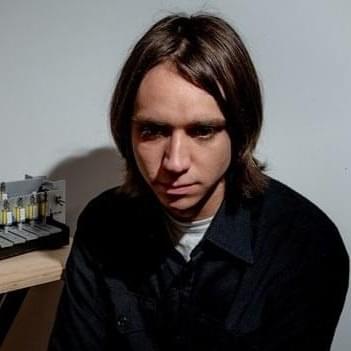
Who Is Otto Benson? Full Biography, Age, Memo Boy, Music Career, Albums, Songs and Facts
SEO Title: Who Is Otto Benson? Full Biography, Age, Memo Boy, Songs, Albums & Career
Meta Description: Who is Otto Benson? Discover the musician’s full biography, age, Memo Boy connection, career journey, albums, songs, musical style, collaborations, and key facts.
Focus Keyword: who is Otto Benson
Related Keywords: Otto Benson biography, Otto Benson age, Otto Benson musician, Otto Benson Memo Boy, OTTO musician, Otto Benson songs, Otto Benson albums, Otto Benson Peanut, Otto Benson music career
Who Is Otto Benson?
Otto Benson is an American musician, songwriter, producer, and experimental recording artist known for his work as Memo Boy, music released under the OTTO name, and his evolving solo career as Otto Benson. A New York native, Benson has developed a distinctive musical identity that combines experimental pop, electronic production, indie songwriting, ambient textures, lo-fi aesthetics, and unconventional guitar music.
Benson belongs to a generation of independent artists whose careers developed alongside online music culture. Instead of following a traditional path built around a single debut album and a carefully maintained commercial image, he has released music through different identities and continually reshaped his sound.
His earlier connection to Memo Boy remains important because it introduced many listeners to his music. Later recordings associated with OTTO explored increasingly experimental territory, while projects released under the Otto Benson name brought songwriting and vocals further into focus.
The 2025 album Peanut became an especially significant chapter in this progression. The record combines Benson’s experimental production instincts with warmer guitars, understated singing, and more direct songwriting.
For listeners asking “Who is Otto Benson?” today, the answer therefore extends beyond one album or musical alias. He is an independent artist whose catalog documents years of experimentation and gradual artistic transformation.
Otto Benson Biography: Quick Profile
| Category | Information |
|---|---|
| Full Name | Otto Benson |
| Profession | Musician, songwriter, producer, recording artist |
| Nationality | American |
| Birthplace | New York, United States |
| Age | Approximately 26 in early 2026 |
| Known As | Otto Benson, OTTO, Memo Boy |
| Genres | Experimental pop, indie, electronic, lo-fi, ambient |
| Known For | Memo Boy, experimental production, Peanut |
| Career Era | 2010s–present |
| Notable Projects | World Greetings, Songs Before Bed, Bobbery, Hobby’s, Peanut |
| Musical Style | Experimental, intimate, textural, melodic |
| Latest Major Album | Peanut |
Benson has maintained considerable privacy around his personal life. Certain biographical details, including an exact publicly confirmed birth date, are therefore less established than information about his music and recording career.
Otto Benson’s Early Life
Otto Benson is a native of New York and became interested in creating and recording music at a young age.
His early development occurred during an important period for independent musicians. Online platforms had dramatically reduced the distance between an unknown bedroom producer and an international audience. Artists no longer necessarily needed a conventional record deal before people could discover their work.
Benson emerged naturally from this environment.
Rather than presenting himself immediately as a traditional singer-songwriter, he experimented with production, electronic textures, instrumentation, and recording techniques. His early work demonstrated an interest in sound itself—not simply melody or lyrics.
Benson also studied engineering, an intriguing part of his background given the technical qualities that would later characterize his production.
His recordings frequently manipulate familiar sounds until they acquire an unusual character. Guitars can feel blurred or distorted, electronic elements may appear unexpectedly, and conventional song structures can give way to atmospheric or fragmented arrangements.
This curiosity became a recurring theme throughout his career.
How Otto Benson Started Making Music
Benson began releasing music while still young, gradually building a substantial catalog rather than waiting for one definitive commercial debut.
That approach is central to understanding his career.
His musical history is not a straight line from an unknown artist to a mainstream breakthrough. Instead, it resembles an archive of experiments, collaborations, changing identities, and increasingly confident songwriting.
Some recordings are electronic and abstract. Others are intimate and melodic. Some feel like fully developed compositions, while others preserve the immediacy associated with sketches or personal recordings.
Over time, these different approaches began forming a recognizable artistic identity.
Otto Benson and Memo Boy
One of the most frequently searched questions about the musician is whether Otto Benson is Memo Boy.
The answer is yes.
Memo Boy was an important early musical identity for Benson and played a major role in introducing his work to online audiences.
The project became associated with dreamy, understated, internet-era independent music. Its atmosphere connected particularly well with listeners who discovered artists through streaming services, recommendation algorithms, social media, and online music communities rather than traditional radio.
For some fans, Memo Boy remains their first point of contact with Benson’s work.
However, Memo Boy represents only one chapter.
As Benson’s interests expanded, so did the music he wanted to create. Instead of remaining permanently tied to one recognizable aesthetic, he continued experimenting under other names.
Why Did Otto Benson Move Beyond Memo Boy?
Artists often adopt aliases because a particular name becomes associated with a specific sound, period, or creative identity.
Benson’s broader career illustrates why moving beyond an established project can provide greater artistic freedom.
The music associated with his subsequent OTTO period could become more abstract, instrumental, electronic, and structurally unconventional.
Rather than attempting to make every new experiment fit naturally beneath the Memo Boy identity, Benson could explore another creative direction.
This evolution also prevented his earliest success from becoming a limitation.
Memo Boy may have helped listeners discover Otto Benson, but his later work shows that he was interested in developing a much wider musical vocabulary.
The OTTO Era
Benson later became associated with experimental releases under the name OTTO.
This phase is particularly important when tracing the development of his production style.
Electronic composition, manipulated samples, processed instruments, unconventional rhythms, ambient passages, and glitch-like textures could all appear within his recordings.
The music did not always follow conventional pop structures.
Instead of building every track around verses, choruses, and immediately recognizable hooks, Benson could treat a piece of music almost like a sonic environment.
Textures could become as important as melodies.
This approach eventually helped distinguish his later songwriting as well. Even when Benson began placing greater emphasis on vocals and guitars, the production rarely became completely conventional.
World Greetings
Among the significant releases associated with Benson’s experimental development is World Greetings, which arrived in 2020.
The project offers a useful entry point into the more electronic side of his catalog.
Its importance becomes particularly clear when compared with Benson’s later work. The atmospheric details and experimental instincts found in subsequent vocal recordings have roots in the production ideas he explored during this period.
Rather than abandoning electronic experimentation when his songwriting developed, Benson incorporated lessons from it.
That continuity is one reason his catalog feels connected despite its stylistic variety.
Clam Day
Clam Day, also released in 2020, forms another part of Benson’s extensive experimental output.
His productivity is significant because it reveals an artist who treats recording as an ongoing practice rather than something reserved exclusively for major album cycles.
This approach has allowed his sound to evolve publicly.
Listeners can move through different releases and hear changes in instrumentation, production, structure, and songwriting as they occur.
For dedicated fans, that makes Benson’s discography particularly rewarding to explore chronologically.
Songs Before Bed
In 2022, Benson released Songs Before Bed, a project whose title appropriately reflects the quieter side of his musical personality.
Intimacy is one of the strongest recurring qualities in Benson’s work.
Even when a recording contains unusual electronic processing, it can still feel private and immediate. His music often avoids the oversized production associated with mainstream pop in favor of smaller sonic spaces.
The listener can feel unusually close to the recording.
This quality would become increasingly important as vocals gained a more prominent place in his later work.
Bobbery
Benson continued his development with Bobbery in 2023.
By this stage, describing his work exclusively as electronic music had become increasingly inadequate.
His catalog had developed connections to experimental pop, indie music, ambient composition, guitar-based songwriting, and lo-fi recording.
The boundaries between those styles remained intentionally loose.
A Benson track might begin with something recognizable—a guitar figure, melody, or simple rhythm—before unusual production decisions alter its character.
This mixture of familiarity and unpredictability is one of the defining features of his music.
Hobby’s With Mietze Conte
Collaboration has also shaped Otto Benson’s artistic development.
In 2024, Benson worked with Mietze Conte on the collaborative project Hobby’s.
Tracks associated with the release include “Lo La,” “Prromise,” “Kiki Coco,” “My Friends,” “Cauliflower,” “Fugue,” and “Shut Up.”
The album demonstrates how comfortably Benson’s experimental instincts translate into collaborative settings.
Rather than presenting himself exclusively as a solitary singer-songwriter, Benson has participated in a broader independent musical community.
His wider collaborative history has also connected him with artists including binki, Cal Fish, Musique Chienne, Ronnie P., and others.
An early recording connected with Clairo, titled “Bobby Bell Holds the Plate with Two Hands,” also belongs to the wider history surrounding his early music.
Otto Benson’s Peanut Album
One of the most important releases in Otto Benson’s career arrived on December 31, 2025, with the album Peanut.
The project represents a notable development because Benson’s voice and songwriting move closer to the center of the music.
Listeners familiar primarily with his experimental instrumental work may find Peanut comparatively direct.
Yet it would be misleading to describe the album as Benson abandoning experimentation.
Instead, Peanut integrates his different musical identities.
Electronic and production-based experimentation remains present, but it is woven around songs that give vocals, melody, guitar, and emotional intimacy more space.
The album consequently serves as a bridge between Benson’s earlier experimental career and his development as a vocal artist.
Songs From Peanut
Notable songs associated with Peanut include:
- “Red and Neon”
- “Mr. Peanut”
- “Raisin”
- “Tumor”
- “Catch You Later”
- “Silo”
- “Soy Beans”
- “Drive Away”
For new listeners searching for Otto Benson songs, this album provides one of the clearest introductions to his current musical direction.
Its accessibility does not eliminate the eccentricities that longtime listeners might expect. Instead, those unusual details become part of a warmer and more song-oriented framework.
Otto Benson’s Musical Style
Otto Benson’s musical style is difficult to define with one genre label.
His work incorporates elements of:
- Experimental pop
- Indie pop
- Electronic music
- Ambient
- Lo-fi
- Glitch
- Experimental guitar
- Indie folk
- Singer-songwriter music
The proportions vary considerably between releases.
Electronic music may dominate one project while guitar and vocals become central to another.
What remains relatively consistent is Benson’s attention to texture.
Sounds rarely feel accidental in their placement, even when a recording deliberately preserves imperfections.
He can use distortion, processing, repetition, unusual rhythmic details, and sonic space to transform relatively simple musical ideas.
What Makes Otto Benson’s Music Different?
Benson’s recordings frequently occupy an interesting space between polished and homemade.
They can contain sophisticated production techniques without sounding excessively clean.
That distinction matters.
Many contemporary recordings remove imperfections in pursuit of technical precision. Benson often appears comfortable allowing unusual textures, rough edges, strange sounds, and unexpected transitions to remain part of the music.
These elements create personality.
His guitar work can feel warm and fragile. Electronic passages can sound playful or abstract. Vocals can remain understated rather than dominating a mix.
Together, these qualities create music that feels carefully constructed while preserving spontaneity.
Otto Benson Discography
Benson’s broader recording history contains numerous projects, singles, experiments, and collaborations.
Among the notable projects associated with his career are:
wnoadiarwb — 2015
An early release connected with Benson’s developing musical identity and experimental recording practice.
e.a.m.w.i.m — 2016
Another project from the earlier phase of his catalog.
A Well-Done Steak with Ketchup — 2017
The unusually titled release demonstrates the playful and unconventional presentation that frequently accompanies Benson’s music.
I Got Laid-Off from SoundCloud — 2017
The title itself reflects the internet-centered environment surrounding Benson’s early musical development.
World Greetings — 2020
A significant project associated with the experimental electronic side of Benson’s career.
Clam Day — 2020
Another notable release demonstrating his prolific approach to independent recording.
Songs Before Bed — 2022
A quieter project highlighting the intimate and atmospheric qualities found throughout his music.
Bobbery — 2023
An important stage in Benson’s continued movement between experimental electronics and broader songwriting.
Hobby’s — 2024
A collaborative project with Mietze Conte that expanded the interpersonal side of his musical catalog.
Peanut — 2025
A major step in Benson’s development as a vocal-focused songwriter while retaining his established experimental sensibility.
Popular Otto Benson Songs
Listeners exploring Otto Benson’s music may encounter songs such as:
“Orange Moon”
One of the titles associated with his broader musical identity and online audience.
“20221002”
A track reflecting the unusual naming conventions found throughout parts of Benson’s catalog.
“Kiki Coco”
A song associated with his collaborative work with Mietze Conte.
“Cauliflower”
Another track from the Hobby’s period.
“Red and Neon”
A notable song connected with Peanut and Benson’s increasingly vocal-centered direction.
“Mr. Peanut”
A track closely associated with the album’s identity.
“Raisin”
Another example of the intimate songwriting found on Peanut.
Because Benson’s music has changed substantially over time, no single song provides a complete representation of his career.
Exploring several eras gives a much clearer picture.
How Old Is Otto Benson?
Otto Benson was described as approximately 26 years old in early 2026.
His precise date of birth has not been broadly established through authoritative public biographical information.
For that reason, exact birthday claims should be treated cautiously unless Benson or an official representative confirms them.
This relative lack of personal information is consistent with his broader public profile.
Benson’s identity has largely been built around his music rather than extensive publicity about his private life.
Where Is Otto Benson From?
Otto Benson is a New York native.
He has also been associated with Brooklyn’s independent music environment, an appropriate setting for an artist whose work frequently moves between experimental electronics and indie songwriting.
Benson has additionally spent time living in Los Angeles.
Geography, however, is only one part of his musical identity.
His career is equally connected to online independent music culture, where artists can build communities that extend far beyond a particular local scene.
Otto Benson’s Personal Life
Compared with many contemporary musicians, relatively little verified information about Otto Benson’s private life has become central to his public identity.
He has largely remained known for his recordings, production, artistic projects, and collaborations.
Information about his family, relationships, and other private matters is not as extensively documented as his musical output.
Avoiding speculation is particularly important in this area.
Benson’s artistic work provides more than enough material through which to understand his public career without turning uncertain personal information into biography.
Otto Benson’s Engineering Background
One particularly interesting detail about Benson is his connection to engineering studies.
This background adds another dimension to his musical identity.
Engineering and music production require different forms of creativity, but they share an interest in systems, structure, experimentation, and problem-solving.
Benson’s music frequently demonstrates a technical curiosity that makes this connection feel especially relevant.
His recordings often sound like the work of someone interested not only in writing a melody but also in discovering what can happen when that melody is processed, rearranged, distorted, or placed within an unexpected sonic environment.
Why Otto Benson’s Career Is Unique
Benson’s career provides a compelling example of how musicians can develop in the streaming and social-media era.
Traditionally, an artist’s biography might revolve around a clear sequence: formation, record deal, debut album, breakthrough single, tour, and subsequent releases.
Benson’s path is less linear.
He released music under different identities. Older material developed online audiences. Experimental projects existed alongside more melodic recordings. Collaborations connected different phases of his career.
Eventually, music released under his own name became another important chapter.
This fluidity makes his story particularly representative of contemporary independent music.
From Internet Artist to Evolving Songwriter
Calling Otto Benson simply an “internet artist” would underestimate his musical development.
Online discovery was important to his early audience, particularly through Memo Boy, but his subsequent career demonstrates a much broader creative ambition.
He has continued releasing, experimenting, collaborating, and refining his songwriting instead of relying solely on nostalgia surrounding an earlier project.
Peanut is especially important in this respect.
The album suggests an artist increasingly comfortable bringing his own voice to the foreground without sacrificing the production ideas developed throughout his earlier career.
Interesting Facts About Otto Benson
Otto Benson is behind Memo Boy. The earlier project remains one of the major reasons listeners first encountered his music.
He has also released experimental music as OTTO. This stage of his career emphasized electronic and instrumental exploration.
He is a New York native. Benson’s background connects him with New York’s wider independent music culture.
He studied engineering. His technical background provides interesting context for his experimental production style.
He started releasing music while young. His catalog stretches back into his teenage years.
He is a prolific recording artist. Benson has accumulated albums, singles, collaborations, and experimental projects across multiple identities.
His sound is difficult to categorize. Indie, electronic, lo-fi, ambient, glitch, experimental pop, and guitar music all appear within his work.
Peanut emphasizes his vocals. The 2025 album represents an important stage in his development as a singer and songwriter.
Frequently Asked Questions About Otto Benson
Who is Otto Benson?
Otto Benson is an American musician, songwriter, producer, and experimental recording artist from New York. He is known for his work as Memo Boy and OTTO and for later releases under his own name.
Is Otto Benson Memo Boy?
Yes. Otto Benson is the musician behind Memo Boy, an earlier project that helped establish his online following.
Is Otto Benson also OTTO?
Benson has released experimental music under the OTTO name. Because other musicians also use variations of Otto professionally, individual releases should be identified carefully.
How old is Otto Benson?
He was described as approximately 26 years old in early 2026. His exact publicly verified birthday is not widely established.
Where was Otto Benson born?
Otto Benson is a New York native.
What genre is Otto Benson?
His music spans experimental pop, indie, electronic, ambient, lo-fi, glitch, and guitar-based songwriting.
What is Otto Benson known for?
Benson is known for Memo Boy, his experimental work as OTTO, his extensive independent catalog, and albums including World Greetings, Songs Before Bed, Bobbery, Hobby’s, and Peanut.
What are Otto Benson’s best-known songs?
Listeners exploring his catalog may encounter “Orange Moon,” “20221002,” “Kiki Coco,” “Cauliflower,” “Red and Neon,” “Mr. Peanut,” and “Raisin,” among other tracks.
What is Otto Benson’s Peanut album?
Peanut is a 2025 album that places greater emphasis on Benson’s vocals, guitar work, and intimate songwriting while maintaining his experimental production style.
Does Otto Benson produce his own music?
Production and sound experimentation are major components of Benson’s artistic identity. His career has consistently involved recording, production, composition, and manipulation of sound alongside songwriting.
Why Otto Benson Is an Artist to Know
Otto Benson stands out because his catalog rewards curiosity.
A listener can begin with the accessible songwriting of Peanut and gradually move backward into increasingly experimental recordings. Another listener might discover Memo Boy first and later realize that Benson continued developing through several distinct musical phases.
Both paths eventually reveal the same characteristic: creative restlessness.
Benson does not appear interested in reproducing one successful sound indefinitely.
Instead, his work continually tests different combinations of electronic production, guitar, melody, atmosphere, vocals, and unconventional composition.
That willingness to evolve gives his catalog unusual depth.
Final Thoughts: Who Is Musical Artist Otto Benson?
Otto Benson is an American musician, songwriter, producer, and experimental artist whose career has evolved from the internet-era Memo Boy project through experimental releases as OTTO and into increasingly personal music under his full name.
His biography is especially interesting because it does not follow the conventional trajectory of a mainstream recording artist.
Benson developed through experimentation.
Early online recordings established an audience. Memo Boy became an important part of his musical identity. OTTO provided space for electronic and instrumental exploration. Projects such as World Greetings, Songs Before Bed, Bobbery, and Hobby’s documented further changes before Peanut brought his vocals and songwriting more clearly into focus.
Across these different phases, several qualities remain consistent: curiosity, intimacy, unconventional production, and a willingness to let music exist outside rigid genre boundaries.
That is ultimately what makes Otto Benson distinctive.
For new listeners searching “Who is Otto Benson?”, Peanut provides an approachable introduction, while Memo Boy and his earlier experimental catalog reveal how many different creative stages led to his current work.
Rather than being defined by one viral song, one alias, or one genre, Otto Benson is best understood as an evolving independent artist whose extensive catalog connects experimental electronic music with intimate contemporary songwriting.